Tariff Model Copilot
From PDF documents to computable components
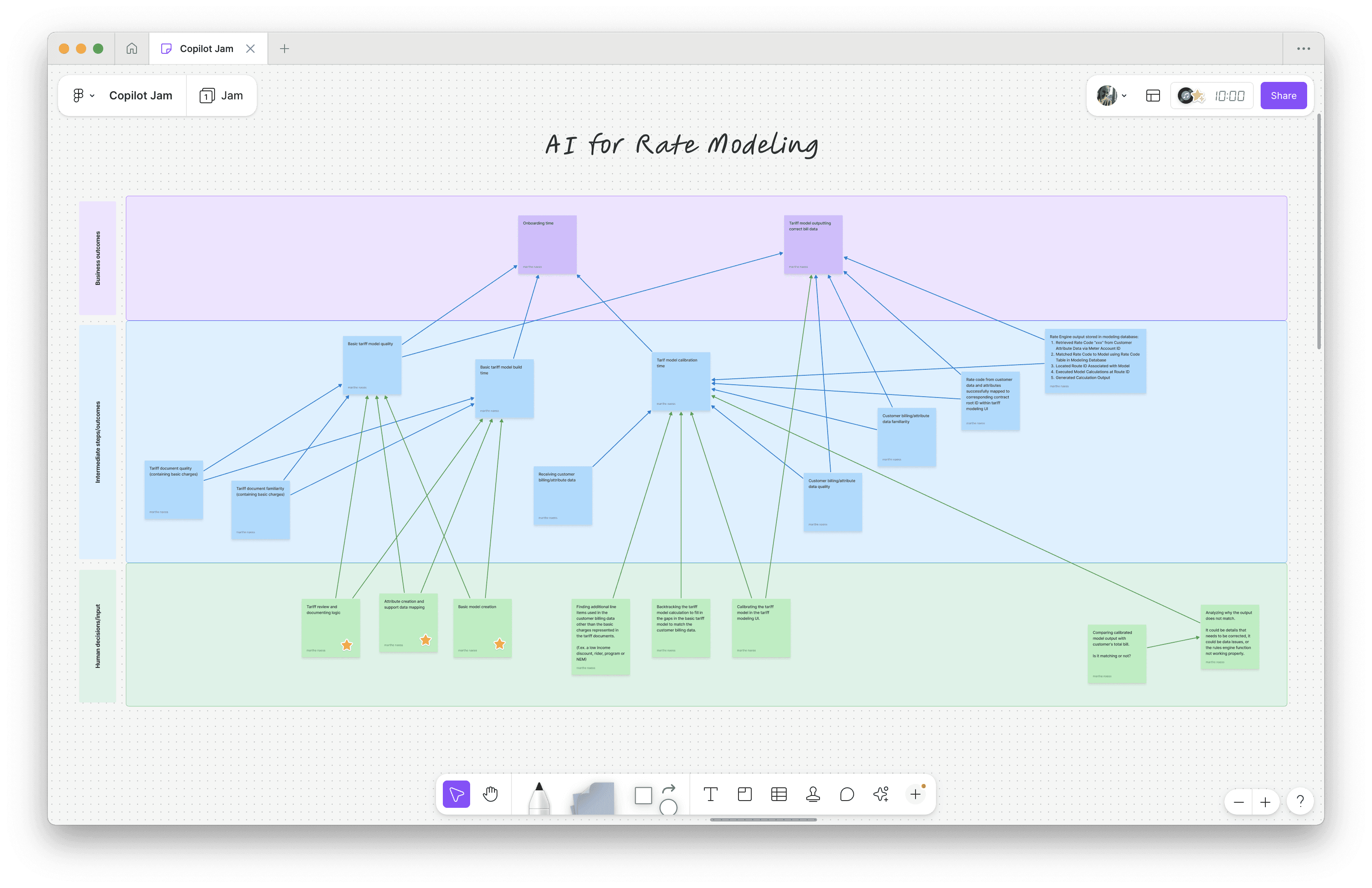
The GridX rate modeling team built our rate engine, a computer program that can model complex Utility rates. Every time GridX onboards a new utility costumer, their existing rates needs to be analyzed, parsed, translated and modeled to fit our rate engine. Each Utility has its own language, and their Tariff documentation are found in regulatory documents, in written language, stored as PDFs, sometimes several, referencing each other. Translating this information and making it fit our rate engine, for highly complex calculations is a labor intensive activity.
The Rate Model Copilot initiative is in its initial phase of building an automated digital process for rate model scaffolding. I have worked with my good coworker Roland, who is the designer behind our current Tarif Modeling software, to figure out the best way to adjust the Tarif Modeling interface and add generative AI functionality.
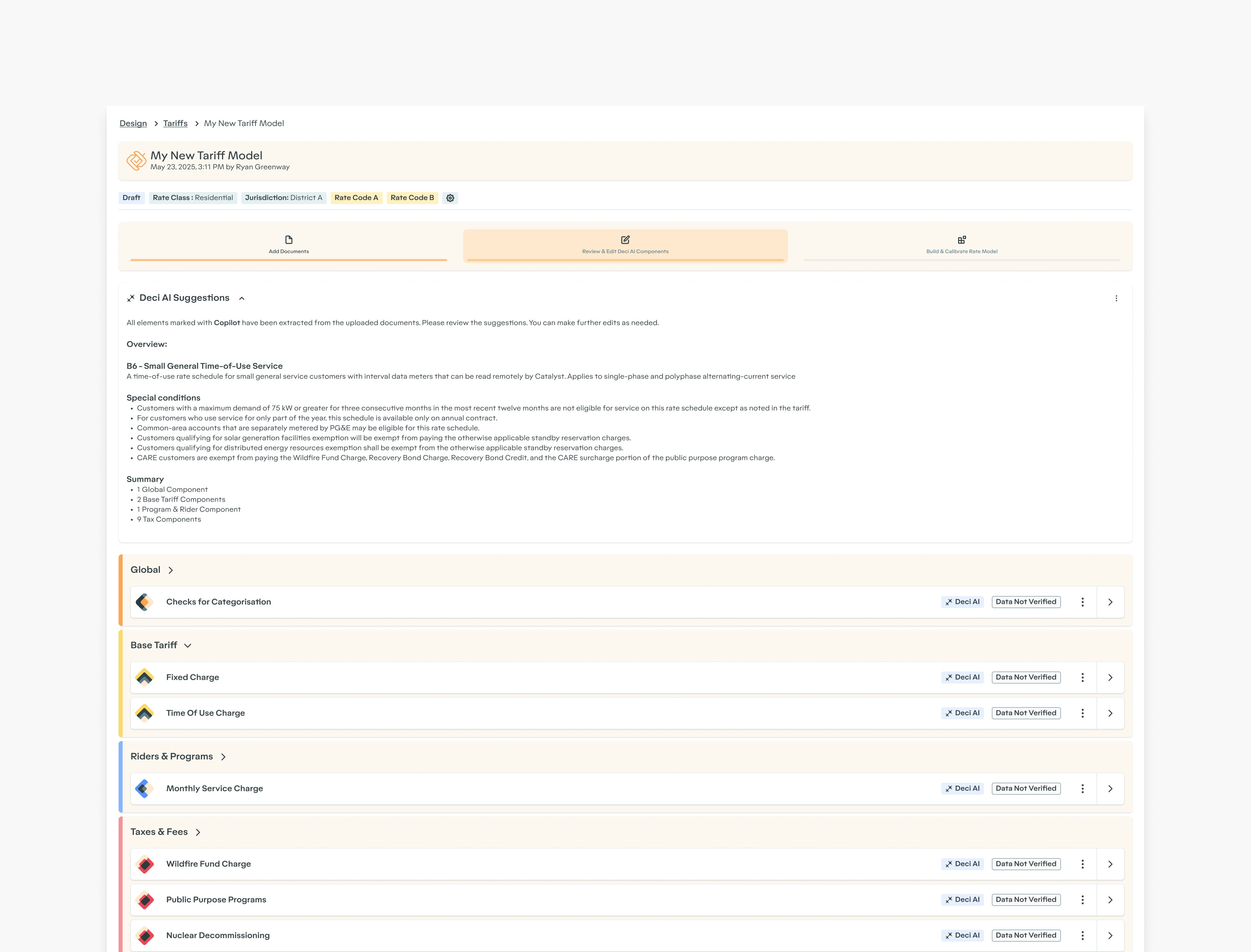
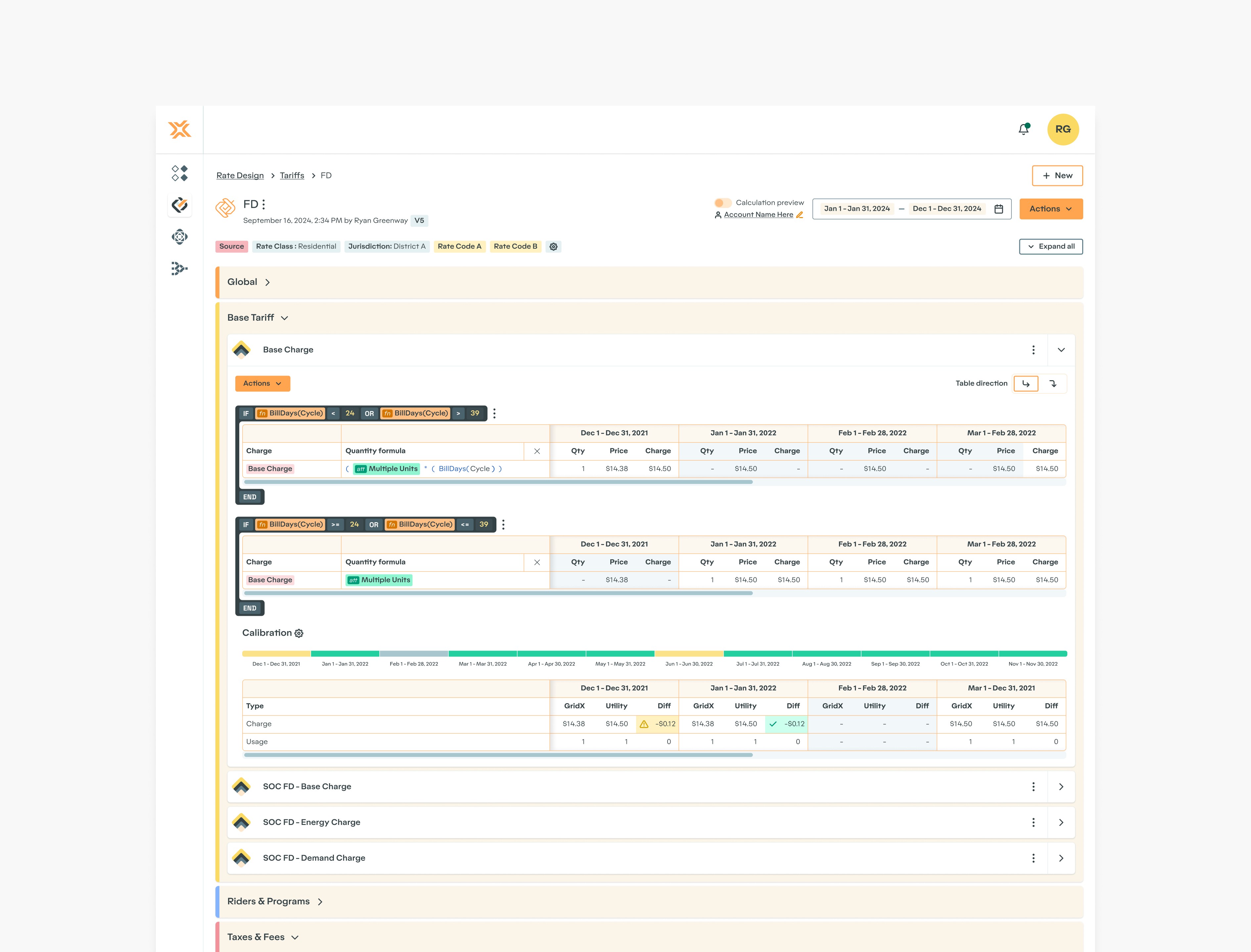
The current tariff modeling interface
The generative AI expectations gap
A significant challenge is emerging around stakeholder expectations versus the reality of generative AI capabilities. The core issue is that stakeholders and colleagues expect controllable, deterministic outcomes from technology that is fundamentally probabilistic and creative. Unlike traditional software where the same input reliably produces the same output, generative AI's variability is actually its strength, but this creates a fundamental mismatch with conventional software expectations.
This disconnect leads to stakeholders treating AI like traditional features, expecting consistent results through proper implementation. However, generative AI requires ongoing validation, refinement, and user feedback loops rather than one-time development.
The approach has been designing validation workflows that acknowledge AI's variable outputs and enable users to guide and iterate on results. While this approach is generating limited enthusiasm (being "less magical" than expected), it provides a realistic framework for leveraging AI's actual capabilities.
Looking ahead, rapid learning through continued experimentation is expected. As team understanding of generative AI's true nature deepens, this foundation should enable more sophisticated feature design that leverages AI's probabilistic strengths rather than working against them.
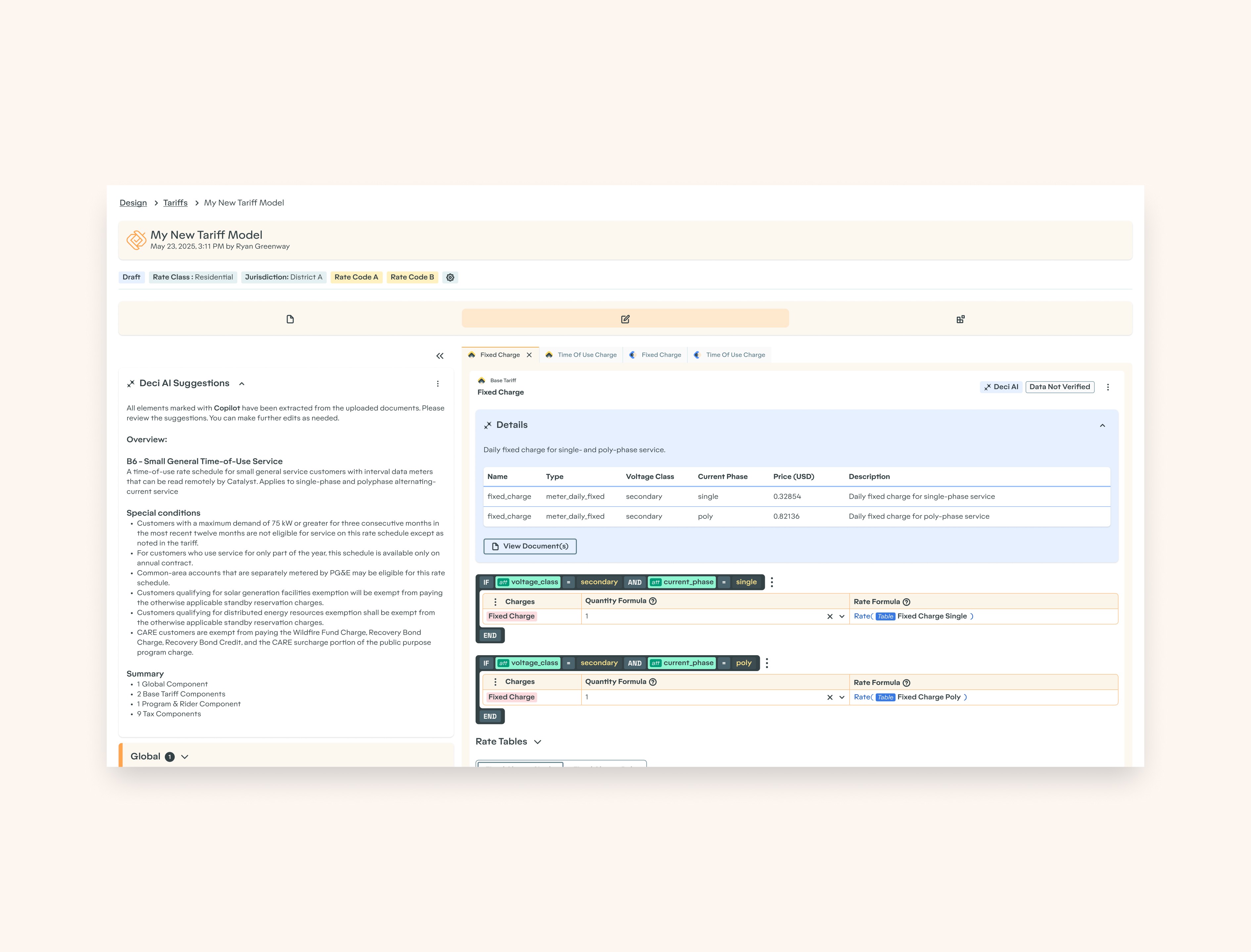
AI-assisted rate parsing with human oversight
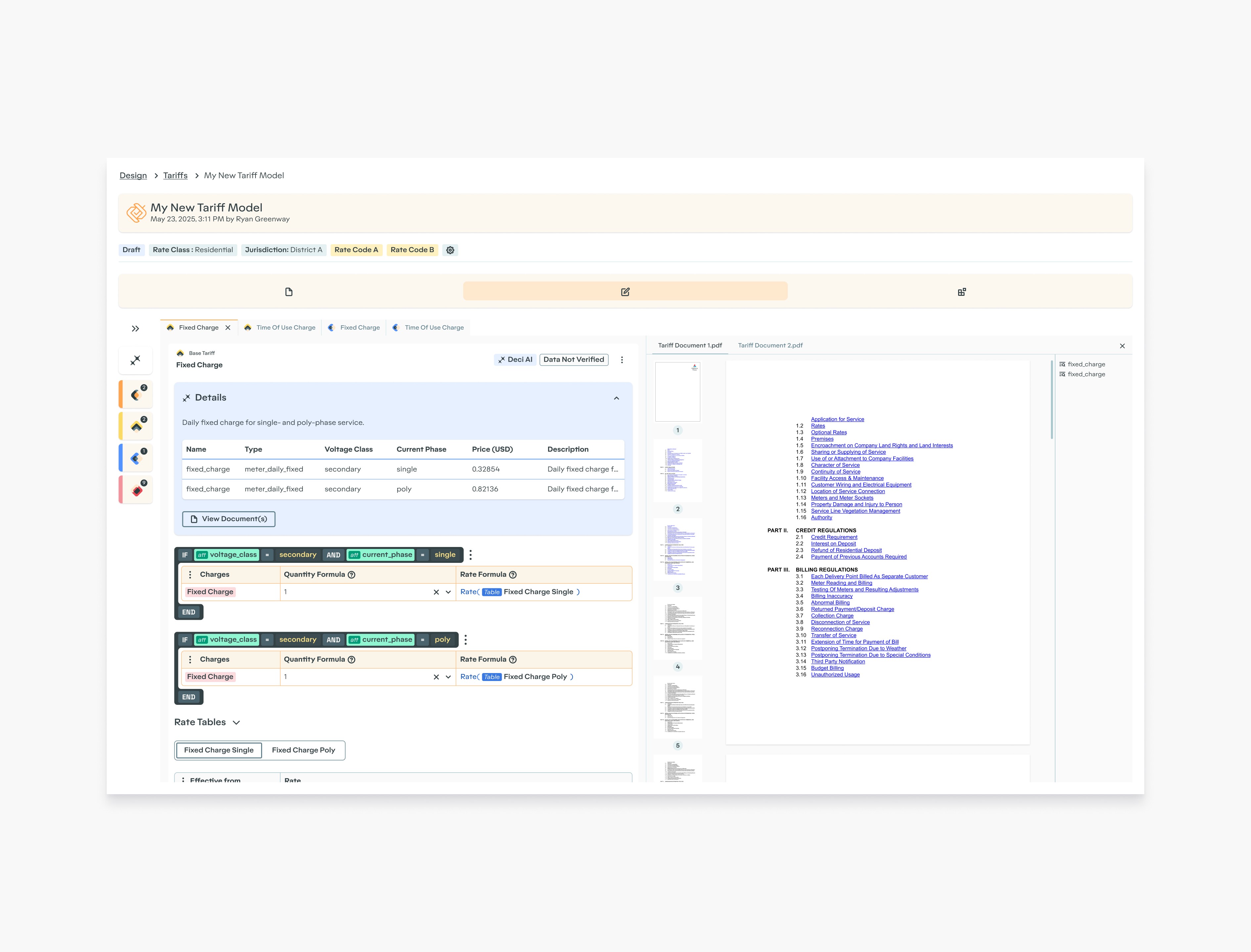
This design concept addresses the core challenge of AI-assisted tariff modeling: how to leverage generative AI for complex rate parsing while maintaining human oversight and validation. The interface explores an approach for users to review and approve AI suggestions before implementation, ensuring accuracy and user control throughout the process.